

Introduction
I entered the world of YCS 1974, not as a student, but as an Adult Assistant (AA). Some of my students invited me into their group and then urged me to attend a training weekend for adults involved with YCS. It was there that I learned from students about the power of the See, Judge, Act method used by YCS and YCW.
And now, just over fifty years after that introduction, I have come to realise that it is only through structured reflection-and-action-in-faith focused on justice in the world that transformation of the world and of self can be achieved.
The origins of the method developed by the Belgian priest, Fr Joseph Cardijn, lie in his commitment to justice for young workers. The See, Judge, Act method, which was one outcome among many that came from his efforts to put his faith into action, was once described by him as “an irreplaceable method of education” and “a precious element in spiritual direction and formation.”
The sources of injustice in the workplace have to be confronted with the commitment modelled by Jesus – a total, whole of life, commitment to overcoming all that opposes the integral development of young people – and done in the name of the Father. The Will of God was Jesus’ primary value and he invites us to make it ours also: “Thy Will be done on earth as it is in heaven.”
The Gospel
Jesus said: ‘Alas for you who build the tombs of the prophets, the men your ancestors killed! In this way you both witness what your ancestors did and approve it; they did the killing, you do the building.
‘And that is why the Wisdom of God said, “I will send them prophets and apostles; some they will slaughter and persecute, so that this generation will have to answer for every prophet’s blood that has been shed since the foundation of the world, from the blood of Abel to the blood of Zechariah, who was murdered between the altar and the sanctuary.” Yes, I tell you, this generation will have to answer for it all.
‘Alas for you lawyers who have taken away the key of knowledge! You have not gone in yourselves, and have prevented others going in who wanted to.’
When he left the house, the scribes and the Pharisees began a furious attack on him and tried to force answers from him on innumerable questions, setting traps to catch him out in something he might say. (Luke 11:47-54)
The Enquiry
See
What accusations does Jesus make against the Jewish leaders?
What impact does his attack have on the Jewish leaders who were present? How do they silence him?
Why does Jesus confront the Jewish leaders in this way if past attempts to have them face up to their immoral and unethical behaviour have failed?
Judge
What do you think about Jesus’ action in this scene from Luke’s Gospel? Is he at fault for provoking the scribes and Pharisees?
In an ideal world, how would people respond to statements about the unjust treatment of others?
What is happening in your world today that is like a parallel to what Jesus describes here? How is his accusation relevant to what you are experiencing today? Have you responded to your situation in the way Jesus has responded? Or are you like the scribes and Pharisees?
ACT
What is Jesus calling you to do about the unjust treatment of people who defend the poor and the marginalised in the world?
What small action can you carry out that will contribute to the change Jesus wants to see in the world and in you?
Who can you involve in your action, when, where and how often?
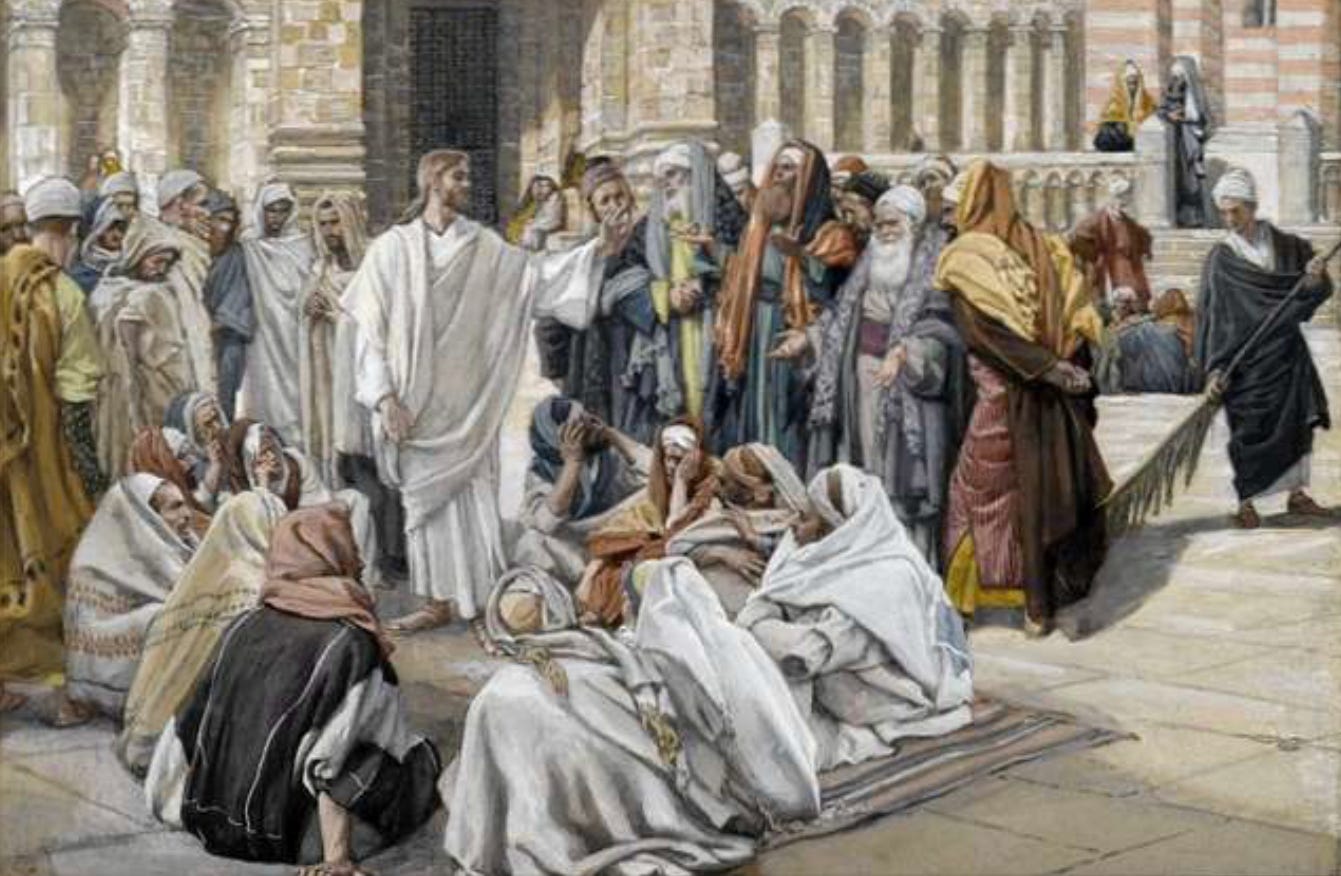
Image Source: James Tissot (Creator), Brooklyn Museum - The Pharisees Question Jesus, Picryl, PDM 1.0
Worth reading: Cardijn, J. (1964). Laypeople into Action. Originally published in French in 1963, this is the only book written by Cardinal Joseph Cardijn. The book was translated into English by Anne Heggie and published in 1964 as Laymen into Action. Almost 60 years later, ATF Press released an imprint of this classic. You may order a copy here. Cardijn’s words quoted in the Introduction were taken from Chapter 10: “The Formation of Lay People for their Apostolate.”