

Introduction
It occurred to me as I prepared this Gospel Enquiry that my experience of writing enquiries has often been like the Goldilocks story: it is either too short, or its too long, but in the end, just right. I refer to the length of the Gospel passage chosen for the Gospel Enquiry. In the end, it has never about quantity, but always about quality.
Recently, when faced with criticism from the US president, Pope Leo XIV responded with “I have no fear of the Trump administration or speaking out loudly of the message of the Gospel, which is what I believe I am here to do.”
As I reflected on the Gospel reading, I came to realise that I am sometimes like the two disciples, so wrapped up in my own little world, that I fail to recognise the presence of Jesus in the Mass … until we are in the Communion Rite.
I am convinced that there are some important lessons to be learned through reflecting and acting on this Gospel event and they are to be found in the celebration of the Eucharist.
The Gospel
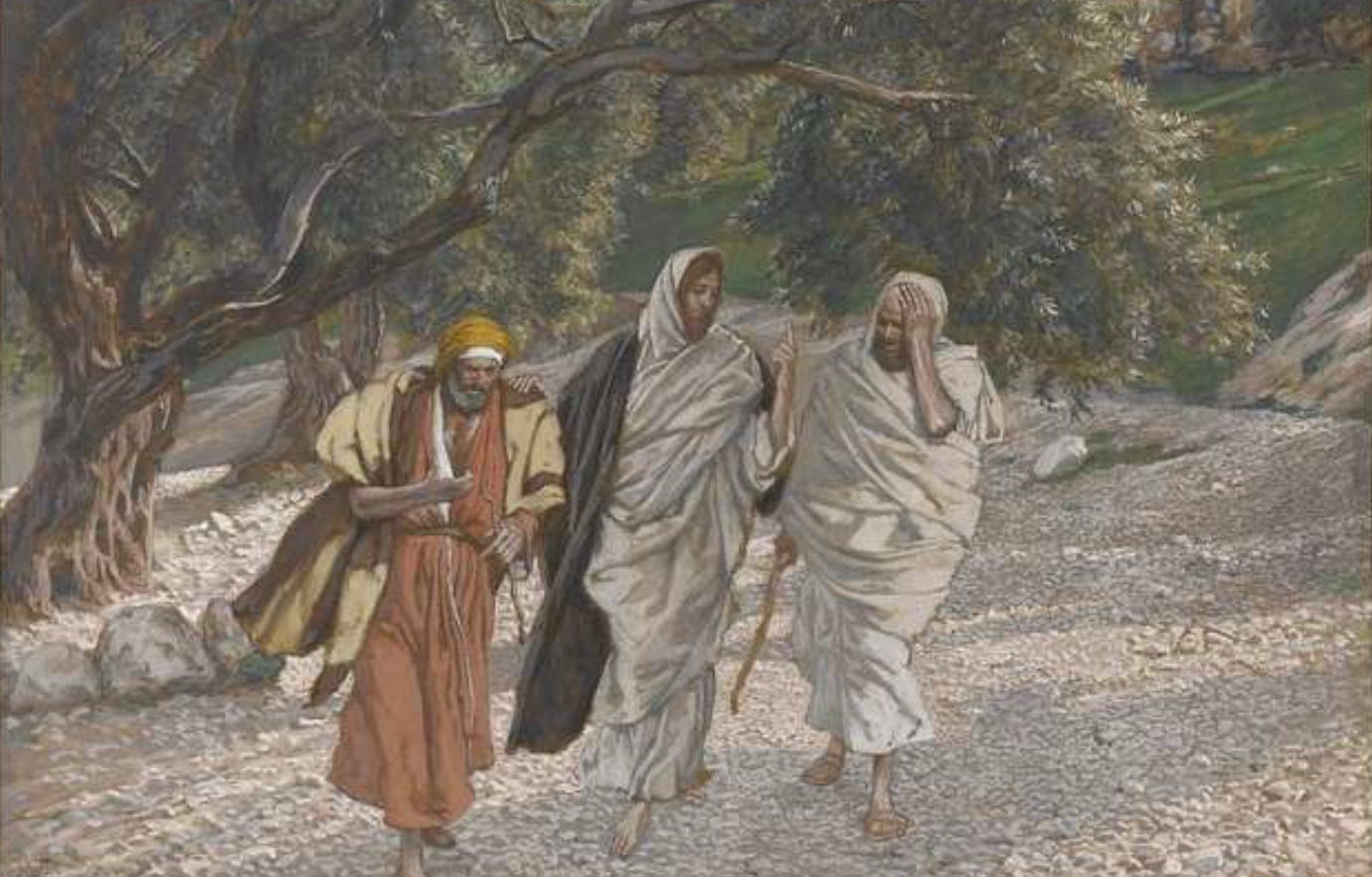
Two of the disciples of Jesus were on their way to a village called Emmaus, seven miles from Jerusalem, and they were talking together about all that had happened. Now as they talked this over, Jesus himself came up and walked by their side; but something prevented them from recognising him. He said to them, ‘What matters are you discussing as you walk along?’ They stopped short, their faces downcast.
Then one of them, called Cleopas, answered him, ‘You must be the only person staying in Jerusalem who does not know the things that have been happening there these last few days.’ ‘What things?’ he asked. ‘All about Jesus of Nazareth’ they answered ‘who proved he was a great prophet by the things he said and did in the sight of God and of the whole people; and how our chief priests and our leaders handed him over to be sentenced to death, and had him crucified. Our own hope had been that he would be the one to set Israel free. And this is not all: two whole days have gone by since it all happened; and some women from our group have astounded us: they went to the tomb in the early morning, and when they did not find the body, they came back to tell us they had seen a vision of angels who declared he was alive. Some of our friends went to the tomb and found everything exactly as the women had reported, but of him they saw nothing.’
Then he said to them, ‘You foolish men! So slow to believe the full message of the prophets! Was it not ordained that the Christ should suffer and so enter into his glory?’ Then, starting with Moses and going through all the prophets, he explained to them the passages throughout the scriptures that were about himself.
When they drew near to the village to which they were going, he made as if to go on; but they pressed him to stay with them. ‘It is nearly evening’ they said ‘and the day is almost over.’ So he went in to stay with them. Now while he was with them at table, he took the bread and said the blessing; then he broke it and handed it to them. And their eyes were opened and they recognised him; but he had vanished from their sight. Then they said to each other, ‘Did not our hearts burn within us as he talked to us on the road and explained the scriptures to us?’
They set out that instant and returned to Jerusalem. There they found the Eleven assembled together with their companions, who said to them, ‘Yes, it is true. The Lord has risen and has appeared to Simon.’ Then they told their story of what had happened on the road and how they had recognised him at the breaking of bread. (Luke 24:13-35)
The Enquiry
See
Read the Gospel story and observe the changing emotional state of the two disciples. Then read the story again and focus on Jesus. What is different about him?
What does the Gospel writer teach you about how to interpret what happened to Jesus? What do you learn about Jesus and his power through this story?
Why did the two disciples not recognise Jesus when he joined them? What is the significance of them recognising Jesus when he broke bread with them?
Judge
How does this Gospel story fit with your experience of the Eucharist?
What do you learn from this story about how to live as a faithful disciple of Jesus?
What happens in the story that challenges how you live your faith?
Act
What is revealed through this story about how to cooperate with God’s plan of salvation?
What small action can you carry out to stay focused on doing God’s will today and tomorrow and the day after?
Who can you involve in your action, when, where and how often?
Image Source: James Tissot (Creator), The Pilgrims of Emmaus on the road, a painting held in the Brooklyn Museum, Picryl, PDM 1.0