
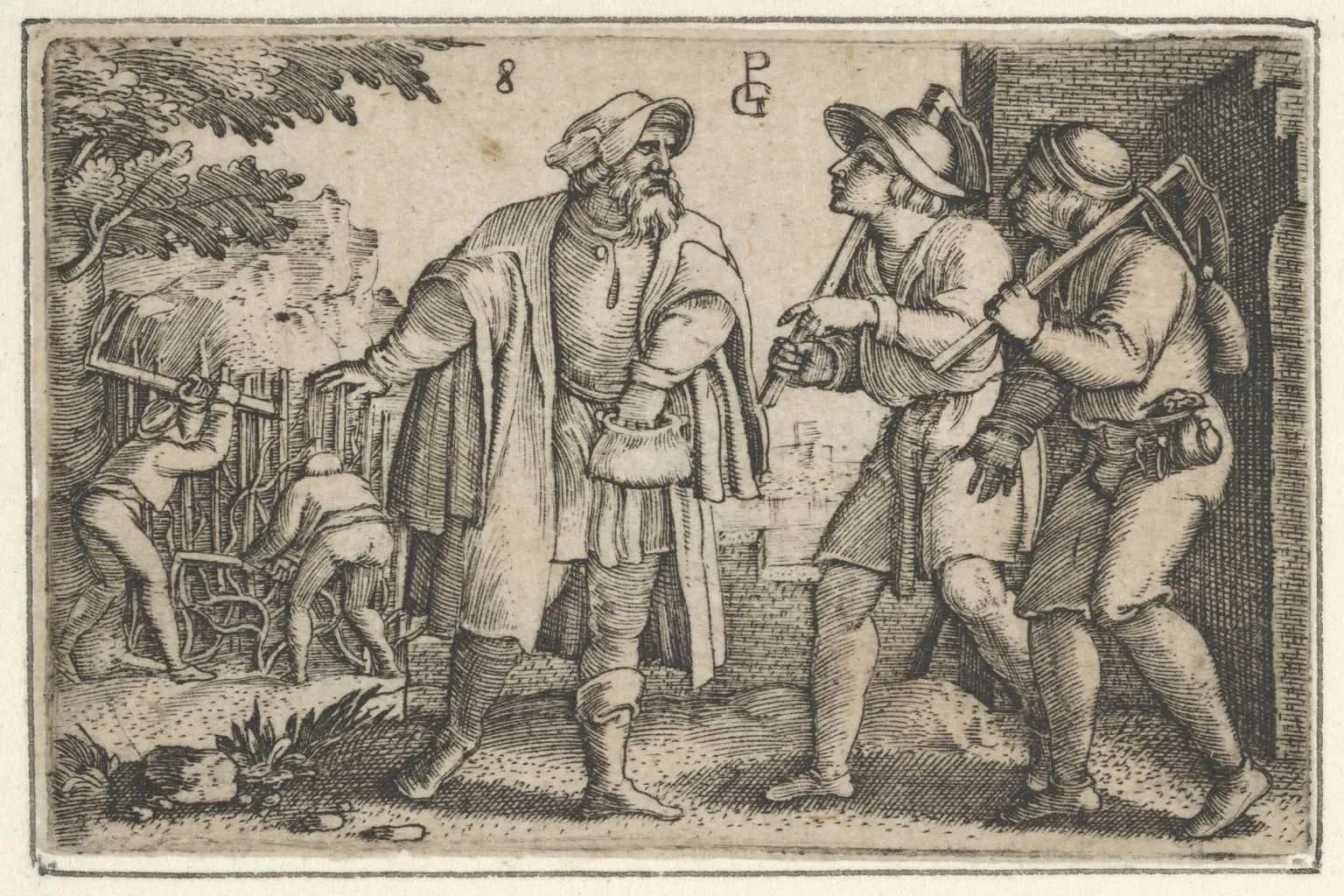
This text from Matthew is set in the Holy City of Jerusalem and depicts Jesus in open conflict with the religious leaders of his day. Following his entry into Jerusalem, at the beginning of chapter 21, Jesus drives the money changers from the temple (Mt 21:12), then curses the fig tree, an allegorical reference to a lifeless religious culture. His authority is then directly challenged by the ‘chief priests and elders of the people’ (Mt 21:23). It is in the context of this challenge that Jesus tells the parable of the two sons. One notable feature of this section of the Gospel is how the crowds acclaim Jesus while the religious elite oppose him. This pattern is affirmed in this passage where Jesus contrasts the belief of the ‘tax collectors and prostitutes’ (Mt 21:32) with that of his adversaries who had refused to accept the witness of John the Baptist.
The parable of the two sons seems to convey a very straightforward message. The son who gives verbal assent but then fails to act is to be condemned. In contrast, the son who initially refused and later does as he was asked is to be praised. The condemnation falls on those who, on the surface, profess a religious belief but, in practice, show themselves to be opposed to the Gospel. In contrast, it is those who are most often thought of as sinners who are seen to embrace the Gospel and, therefore find themselves welcomed in the ‘kingdom of God’ (Mt 21:31).
Gospel Text: Matthew 21:28-32
Jesus said to the chief priests and elders of the people, ‘What is your opinion? A man had two sons. He went and said to the first, “My boy, you go and work in the vineyard today.” He answered, “I will not go,” but afterwards thought better of it and went. The man then went and said the same thing to the second who answered, “Certainly, sir,” but did not go. Which of the two did the father’s will?’ ‘The first’ they said. Jesus said to them, ‘I tell you solemnly, tax collectors and prostitutes are making their way into the kingdom of God before you. For John came to you, a pattern of true righteousness, but you did not believe him, and yet the tax collectors and prostitutes did. Even after seeing that, you refused to think better of it and believe in him.’
See
How are the religious leaders of the time depicted in this passage?
How are the tax collectors and prostitutes depicted in this passage?
What message is conveyed by the parable of the two sons?
Judge
What does this passage teach about integrity of speech and actions?
Where, today, can we see failings similar to those condemned by Jesus in this parable?
Who, in today’s world, might be seen as the outsiders, who embrace the Gospel?
Act
What can we do to ensure that our own actions are in line with the faith we profess?
What action can we take if religious leaders of today fail to act with integrity?
How can we act to ensure that those who might appear to be outsiders, in our communities, are made to feel welcome?
Image: https://christian.art/daily-gospel-reading/matthew-21-28-32-2020/
Gospel Text https://www.universalis.com/Australia/1100/mass.htm
Further Reading:
“How can we act to ensure that those who might appear to be outsiders, in our communities, are made to feel welcome?”
Close Catholic schools here in the U.S. because they now serve primarily the upper classes while the poor are left in the public schools. Then, use the resources for programs that include the poor.