

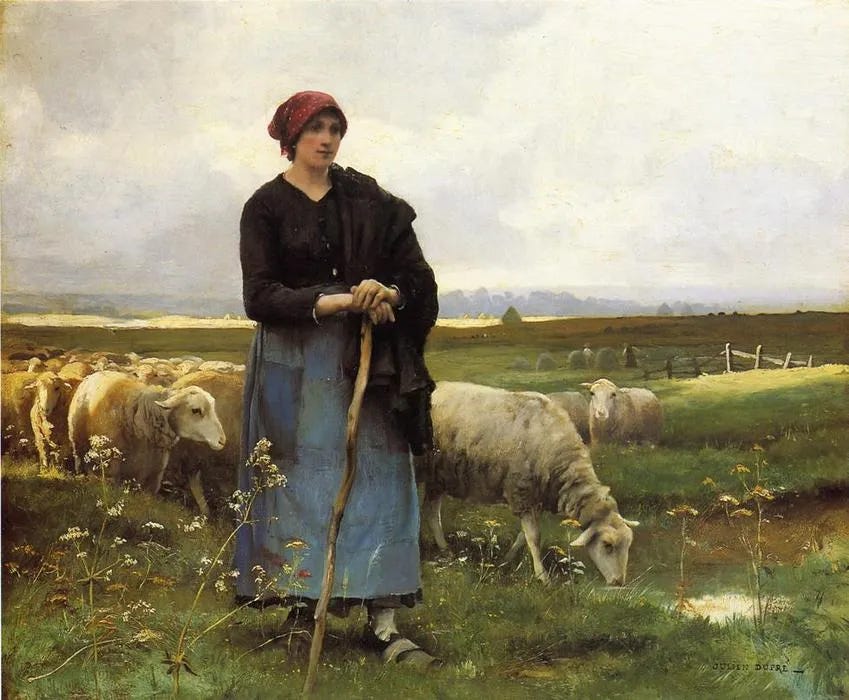
The references to shepherds and sheep in this text is a continuation of a long used metaphor among the people of Israel that they are God’s flock and, most famously expressed in Psalm 23, that God is their shepherd. It was also common, in the Hebrew scriptures, for those exercising leadership in the community to be referred to as shepherds. The burden of the shepherd’s responsibility is immense as the very life of the sheep is in their hands. The vitriol expressed towards the ‘false’ shepherds (thieves, brigands, strangers) is probably a carry-over from the conflict of the previous chapter where the Pharisees sought to undermine the miracle (sign) of the man whose sight had been restored.
This conflict is an important backdrop to this text as is contrasts the liberating, life giving action of Jesus with the restrictive, oppressive interjection of the Pharisees. Jesus’ has come so that humanity might live ‘life to the full’, an image presented in the metaphor of the sheep finding certain pasture and restated in the famous final verse of this text. ‘I have come so that they may have life and have it to the full.’ (John 10:10).
The text raises a number of important points of reflection for us. Among these are the questions of what it means for us to live life to the full, as Jesus intended and, secondly, what does the metaphor of the shepherd and the sheep say to us about how we exercise our stewardship of those in our care. Those in our care may be colleagues in the workplace, members of our family or, perhaps, those who live at the margins of our community.
Gospel Text John 10:1-10
Jesus said:
‘I tell you most solemnly, anyone who does not enter the sheepfold through the gate, but gets in some other way is a thief and a brigand. The one who enters through the gate is the shepherd of the flock; the gatekeeper lets him in, the sheep hear his voice, one by one he calls his own sheep and leads them out. When he has brought out his flock, he goes ahead of them, and the sheep follow because they know his voice. They never follow a stranger but run away from him: they do not recognise the voice of strangers.’
Jesus told them this parable but they failed to understand what he meant by telling it to them.
So Jesus spoke to them again:
‘I tell you most solemnly,
I am the gate of the sheepfold.
All others who have come
are thieves and brigands;
but the sheep took no notice of them.
I am the gate.
Anyone who enters through me will be safe:
he will go freely in and out
and be sure of finding pasture.
The thief comes
only to steal and kill and destroy.
I have come
so that they may have life and have it to the full.’
See
What does the text reveal about the relationship between the sheep and the shepherd?
How is this contrasted with the image of the ‘thieves and brigands’?
What might the image of the gate represent in this metaphor?
Judge
What might the image of ‘thieves and brigands’ apply to in our world today?
Jesus says he has come that people may have life to the full. What does life to the full mean in our context?
Jesus’ actions are seen as liberating and reassuring. How does this apply to our own life situation?
Act
What steps can I take to ensure that my actions are life giving and liberating for those in my care or under my influence?
What do I need to do to ensure that I am living ‘life to the full’?
What actions can I take to assist others in living ‘life to the full’?
Image: https://christian.art/daily-gospel-reading/john-10-1-10-2021/
Gospel Text https://www.universalis.com/Australia/1100/mass.htm
Further Reading: