

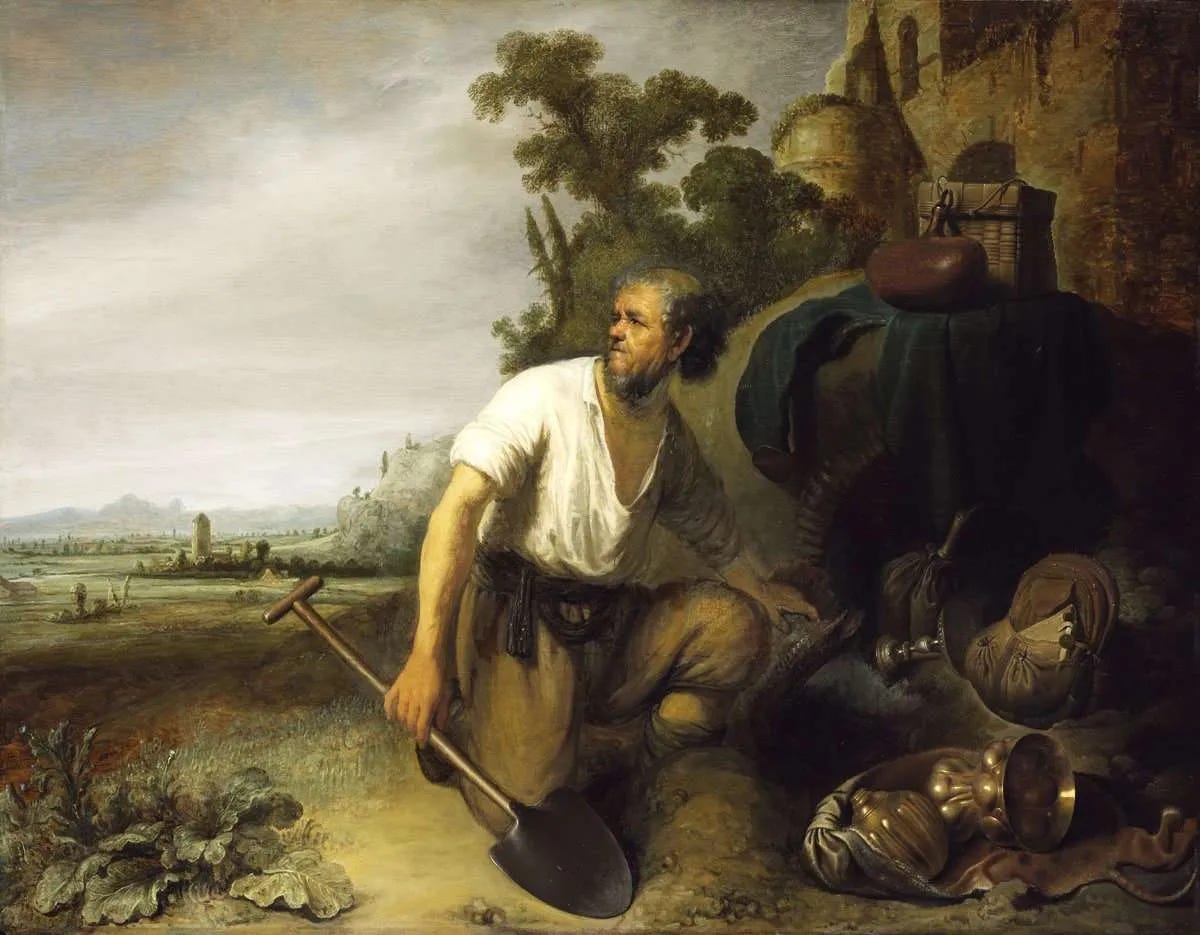
This text concludes the series of parables in chapter 13 of Matthew’s Gospel with three brief similitudes. The first two, the hidden treasure (Mt 13:44) and the fine pearls (Mt 13:45-46) are very alike in their emphasis while the third, the parable of the dragnet (Mt 13:47-50) provides a very different perspective. The common theme is the kingdom of heaven, to which all three images are likened. The text concludes with a focus on understanding, which has been critical throughout the chapter, and a curious ‘mini-parable’ about a householder who ‘brings out from his storeroom things both old and new’ (Mt 13:52)
The first two parables in this text have the shared meaning of recognising the immense value of the kingdom of heaven, a worth which his unsurpassed and of greater value than all that we are and all that we have. The Gospel reminds us that the kingdom of heaven should be sought and embraced, no matter what the cost. The parable of the dragnet includes two powerful images. The first is a universal gathering, inclusive of all. A reminder to Matthew’s first century audience that the Gospel is for all people, not just the children of Israel. Then there is a sorting between the ‘wicked and the just’ (Mt 13:51). A judgement based on actions, not on race, religion or status.
The concluding verses return to the importance of understanding. It juxtaposes the idea of a scribe who is an expert in the law with that of a disciple who seeks to learn. The reference to things old and new is, most likely alluding to the tradition of the Hebrew scriptures, the Torah and the new revelation of God in Jesus. These two, properly understood, draw from and inform one another to provide a more complete understanding of Jesus’ message.
Gospel Text: Matthew 13:44-52
Jesus said to the crowds, ‘The kingdom of heaven is like treasure hidden in a field which someone has found; he hides it again, goes off happy, sells everything he owns and buys the field.
‘Again, the kingdom of heaven is like a merchant looking for fine pearls; when he finds one of great value he goes and sells everything he owns and buys it.
‘Again, the kingdom of heaven is like a dragnet cast into the sea that brings in a haul of all kinds. When it is full, the fishermen haul it ashore; then, sitting down, they collect the good ones in a basket and throw away those that are no use. This is how it will be at the end of time: the angels will appear and separate the wicked from the just to throw them into the blazing furnace where there will be weeping and grinding of teeth.
‘Have you understood all this?’ They said, ‘Yes.’ And he said to them, ‘Well then, every scribe who becomes a disciple of the kingdom of heaven is like a householder who brings out from his storeroom things both new and old.’
See
What similar point is emphasised in the first two parables?
What does the parable of the dragnet convey about the kingdom of heaven?
What is the basis for keeping or rejecting the catch from the dragnet?
Judge
What does the phrase about a scribe becoming a disciple suggest about the process of learning in life?
What does this text indicate about the relationship between the Hebrew Scriptures (Old Testament) and the New Testament?
In what other areas should the dimensions of ‘old’ and ‘new’ be brought together?
Act
What steps can we take to ensure that we value the kingdom of heaven above all else?
What actions can we undertake to ensure that the universal and inclusive character of the kingdom of heaven is evident in our communities?
What do we need to do to ensure that traditional approaches and new ideas can work well together in our communities?
Image: https://christian.art/daily-gospel-reading/matthew-13-44-46-2023/
Gospel Text https://www.universalis.com/Australia/1100/mass.htm
Further Reading: