

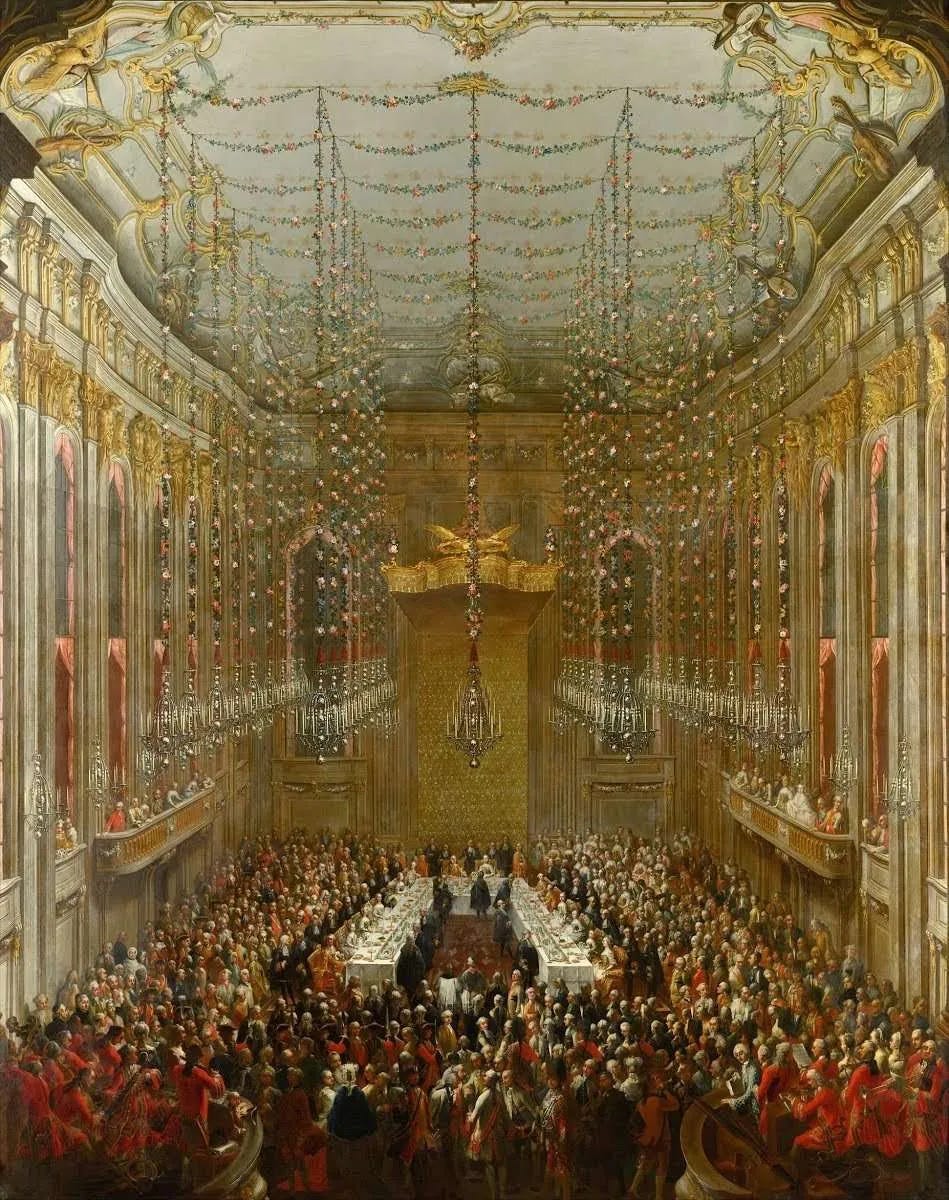
All of the Sunday Gospels for the month of October are drawn from the twenty-second chapter of Matthew’s Gospel. Curiously, last week’s text was from the latter part of the chapter while the text for this week is found at the start of the chapter. The audience for Jesus’ parables, in this chapter, are the religious leaders of the time. In this text the writer names ‘the chief priests and the elders of the people’ (Mt 22:1), later in the chapter, the Pharisees are named. The parable, in allegorical form, indicts the religious authorities for their lack of care for their place as God’s chosen people and, even further, for their malicious treatment of those who adhered to God’s word. The lack of care is depicted in those who simply went about their business without regard for having been invited to the wedding (Mt 22:5), while the malice is shown in the mistreatment of the servants (Mt 22:6). The destruction of the murderers and burning of their town (Mt 22:7) is painfully reminiscent of the fate of the city of Jerusalem, its temple and the people at the hands of the Romans around a decade before Matthew’s Gospel was written. Evidently, the author intends to portray the destruction of Jerusalem as the punishment of the religious elite, by God, for their malice and lack of integrity as the custodians of God’s Covenant.
The second phase of the parable sees the King extending the invitation for all people to join the banquet. A gesture with unmistakable echoes of the influx of Gentiles into the infant Christian Churches of the late first century. God’s love is available to all people ‘bad and good alike’ (Mt 22:10), however, as the harsh treatment of the unsuitably dressed guest conveys, it is not enough to simply be invited, one must freely choose to live according to God’s Kingdom in order to share in the banquet. Father Michael Fallon MSC sums up the parable as follows:
“The point of the parable is that enjoyment of the blessings of God is always a matter of free choice. God invites all but forces no one. We must respond to love, and if we choose not to we cannot enjoy divine communion.” https://mbfallon.com/matthew.html
Gospel Text: Matthew 22:1-14
Jesus began to speak to the chief priests and elders of the people in parables: ‘The kingdom of heaven may be compared to a king who gave a feast for his son’s wedding. He sent his servants to call those who had been invited, but they would not come. Next he sent some more servants. “Tell those who have been invited” he said “that I have my banquet all prepared, my oxen and fattened cattle have been slaughtered, everything is ready. Come to the wedding.” But they were not interested: one went off to his farm, another to his business, and the rest seized his servants, maltreated them and killed them. The king was furious. He despatched his troops, destroyed those murderers and burnt their town. Then he said to his servants, “The wedding is ready; but as those who were invited proved to be unworthy, go to the crossroads in the town and invite everyone you can find to the wedding.” So these servants went out on to the roads and collected together everyone they could find, bad and good alike; and the wedding hall was filled with guests. When the king came in to look at the guests he noticed one man who was not wearing a wedding garment, and said to him, “How did you get in here, my friend, without a wedding garment?” And the man was silent. Then the king said to the attendants, “Bind him hand and foot and throw him out into the dark, where there will be weeping and grinding of teeth.” For many are called, but few are chosen.’
See
What might be the significant of Jesus directing this parable to the ‘chief priests and elders of the people’?
How would we describe the behaviour of the invited guests in this parable?
Who might the allegory be representing as the invited guests, the king, those who ultimately attend the wedding feast?
Judge
What does the parable teach us about the privilege of being invited into God’s kingdom?
If this parable was set in modern times, who might be the people who ultimately attend the wedding feast?
Jesus’ parable is an indictment of the religious elite of his time. What warning does that carry for those of us who are religious?
Act
What actions do we need to take, in our own lives, to ensure we do not disregard the privilege we have in being invited into God’s kingdom?
How do we ensure that we are responding freely in love, to God’s invitation, and not simply acting religious?
What steps can we take to ensure we are welcoming of all ‘good and bad alike’ (Mt 22:10), in our own communities?
Image https://christian.art/daily-gospel-reading/matthew-20-1-16-2023-2/
Gospel Text https://www.universalis.com/Australia/1100/mass.htm
Further Reading: